


















Latest News & Rebuilds
How to Choose the Right Camshaft for Your Build.

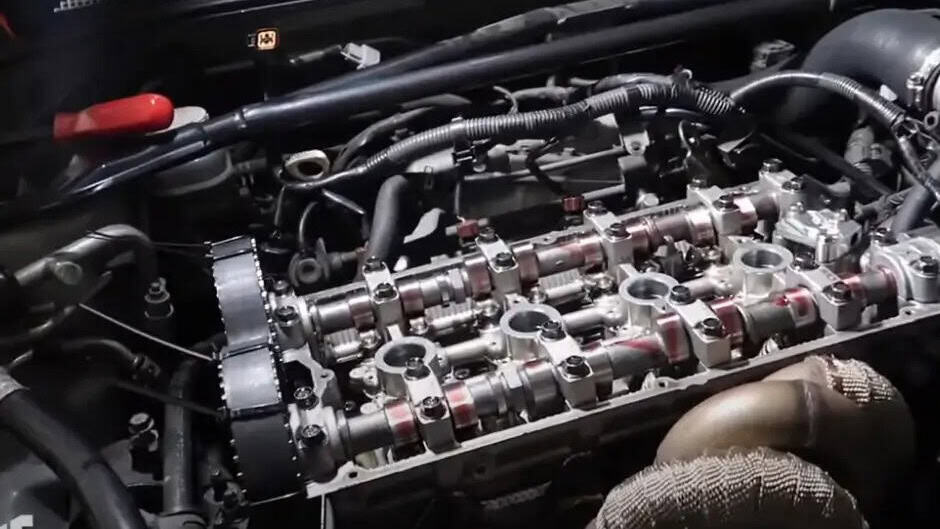
Choosing the right camshafts for your high performance engine is one of the most important decisions when you start a build. The cam has a major influence on where (in the rev range) an engine makes power, how it responds, how it idles, and ultimately how well the entire engine combo performs.
The biggest mistake is assuming that the largest or most aggressive camshaft will automatically produce the best result. In reality, the right camshaft is the one that matches the engine, cylinder heads, induction system, compression ratio, drivetrain, and – most importantly – how the vehicle will actually be used.
Keep reading to learn the recommended steps to choose the right camshaft for your build.
Start With the Application
Before committing to a cam upgrade for your motor, you need to look at the complete engine and vehicle combination.
A cam that works exceptionally well in a dedicated drag car may be completely unsuitable for a street-driven vehicle. Likewise, a camshaft designed for a high-RPM naturally aspirated race engine may not be the right choice for a turbocharged combination or a vehicle that needs strong low-RPM torque.
Important factors include:
- Engine size and configuration
- Compression ratio
- Cylinder head specifications
- Intake and exhaust systems
- Fuel system and engine management
- Naturally aspirated, turbocharged or supercharged operation
- Gear ratios
- Transmission type
- Vehicle weight
- Intended RPM range
- How the vehicle will actually be driven
The camshaft doesn’t work in isolation. It has to work with everything around it.
Bigger Cams Aren’t Always Better
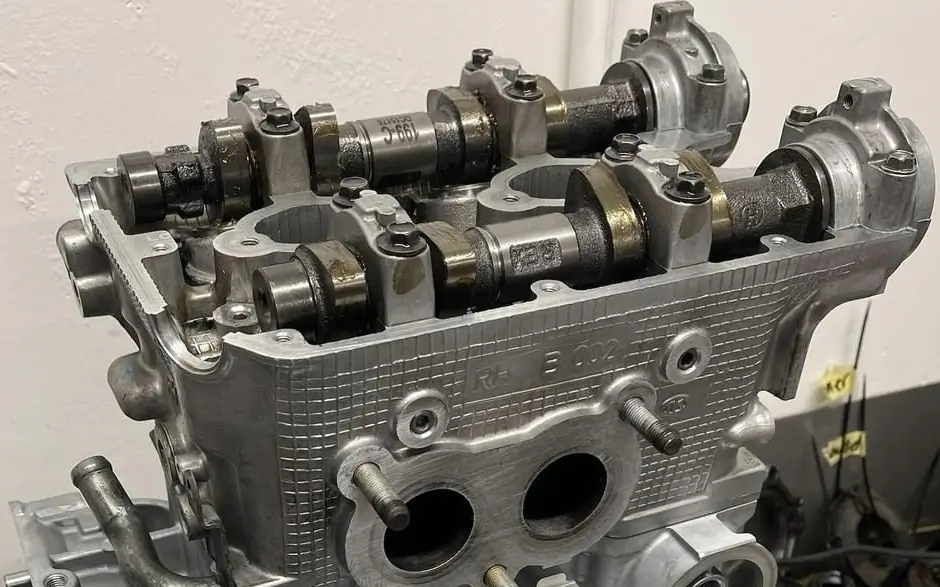
One of the most common misconceptions in performance engine building is that a bigger camshaft automatically means more performance.
A larger cam can move the engine’s powerband higher in the RPM range, but that doesn’t necessarily make the vehicle faster or more enjoyable to drive.
If the engine spends most of its time below the camshaft’s intended operating range, the result can be poor throttle response, reduced low-speed torque and difficult drivability.
A camshaft with a broader, more usable powerband can often produce a much better-performing vehicle, even if its peak horsepower number isn’t as impressive.
If you want to choose the right camshaft for your build, you should always start with the intended application rather than a search for the biggest available specifications.
Understanding Camshaft Specifications
Camshaft specs can seem complicated, but the key numbers tell you a lot about how a camshaft is designed to behave.
Duration
Duration describes how long the valve is held open during the engine cycle.
Generally, increasing duration moves the engine’s effective powerband higher in the RPM range. Shorter-duration profiles tend to favour low- and mid-range torque and drivability, while longer-duration profiles are generally suited to engines designed to operate at higher RPM.
It’s also worth noting that “advertised duration” and “measured duration” are two different numbers, and should be treated as such. Advertised duration is the total number of crankshaft degrees that the camshaft is in contact with the lifter – this number includes the lash ramp and doesn’t reflect the true measurement of the lobe.
Instead you should look at the measured duration figures. At Kelford Cams, we call this “Duration @ 1.0mm valve lift” and this gives you a much clearer picture of the actual duration and aggressiveness of the cam. Some brands of “272” camshafts will have a completely different duration @ 1.0mm lift to the equivalent Kelford option.
However, duration cannot be considered on its own. The cylinder head, compression ratio, induction system and other engine characteristics all influence the result.
Lift
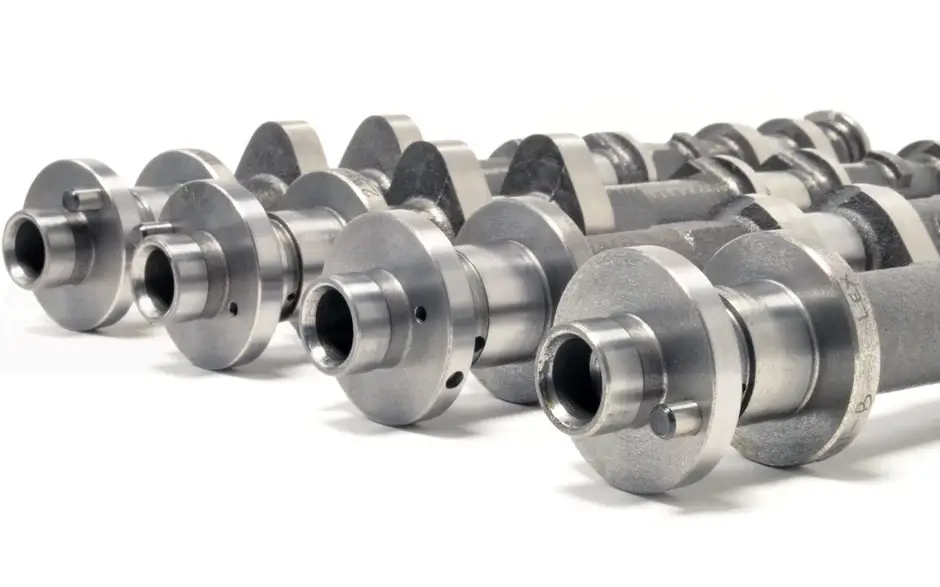
Lift describes how far the valve is opened.
More lift can allow the engine to take advantage of the airflow capabilities of the cylinder head, but maximum lift isn’t automatically better. The ideal lift depends on the cylinder head, valve size, rocker ratio and overall engine combination.
This is why simply comparing lift figures between two camshafts doesn’t necessarily tell you which camshaft will perform better.
Lobe Separation Angle
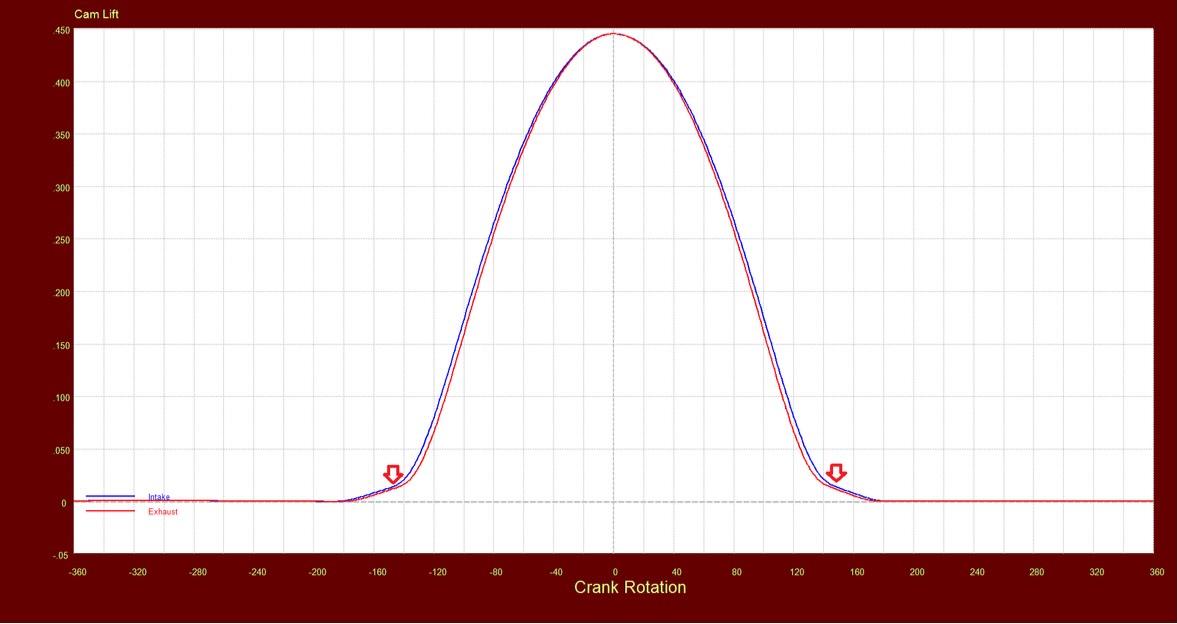
Lobe separation is another important part of camshaft design. It is the difference between the timing of the inlet and exhaust lobes in an engine. In a single cam format, lobe separation is fixed at the time of grinding the cam and can’t be changed later. In a twin cam engine, it can be changed using adjustable cam gears or variable valve timing changes.
Changing lobe separation affects valve overlap, idle characteristics, vacuum, torque characteristics and the overall shape of the power curve.
A tighter lobe separation generally increases overlap and can produce a more aggressive engine character, while a wider separation can provide different vacuum, idle and power characteristics.
Again, there is no universally “best” number. The correct specification depends on the application.
Street, Performance and Race Applications
A street engine generally benefits from a camshaft that provides a broad and usable powerband.
For a vehicle that spends most of its time on the road, strong low- and mid-range torque, good throttle response and acceptable idle quality are often more valuable than chasing maximum horsepower at the top of the RPM range.
As the application becomes more performance focused, the camshaft can be designed to operate at higher RPM and take advantage of increased airflow, compression and gearing.
Dedicated race engines are a different proposition again. A drag racing engine, circuit racing engine and naturally aspirated high-RPM engine can all require very different camshaft characteristics, even if they have similar displacement.
The objective isn’t simply to make the biggest possible peak power number. It’s to put the power where the vehicle can actually use it.
Power, Powerband and RPM Requirements
We ask the following questions to determine the ideal duration of your new cams. Typically shorter duration cams are suited to lower RPM ranges and longer duration cams are suited to higher RPM ranges.
You could have a narrow operating band, but high torque is required for a vehicle like a jet boat, or you may need a wider torque band for smoother power delivery in a traction-limited race class. Your answers will have a huge influence over the cams we’ll recommend.
This will also help with other parts such as follower and valve spring selection.
What Type of Turbo Do You Have?
Of course this is only relevant if you are running a turbo (or Supercharger) and is useful to try and work out with the application and power target are achievable by the turbo frame size. Housing sizes can influence powerband and torque band, so trying to compliment this with cam profiles is important
What Fuel Are You Running?
The answer is useful to determine if any extra cam or valve timing is required to compensate for the density of the fuel in the intake charge. Say converting from a petrol based engine to a methanol fuel will increase how much fuel is physically in the intake charge travelling through the head and in some cases needs to be accounted for.
It is also useful for determining power output capability of the combo.
What Are Your Build Specs? (Stroker, Head Work, Intake/Exhaust etc)
These answers help with determining what your engine combo is capable of and what constraints it may have. A long stroke engine that has an RPM limit because of high piston speeds, or maybe it’s just completely stock from the air filter to the muffler and too much cam could make make it slower.
What is Your Gearing?
Is your gearbox stock, an H pattern dog box, a full blown sequential, a powerglide?
Knowing this can help fine tune the cam timing requirements. A heavier car with fewer gears or long gearing might want lower duration cam with tighter lobe separation to maximise torque. A light car with close ratio gearing can make more use of a short poweband, so can be optimised for high end power at the expense of mid-range torque. It can also help with valvetrain recommendations such as dealing with the BANG! from the exhaust on the upshift of a sequential gearbox application
If we are able to get all of this info to begin with we can help you to choose the right camshaft for your build, along with the associated valvetrain parts to give the best performance for your setup specifically
What Are Your Horsepower Targets?
Your horsepower target will help determine the size of the cams and helps with narrowing down the requirements of the full package.
A 2.0 litre 300hp turbo street car and a 2.0 litre 1400hp turbo drag car have very different requirements, but a 2.0 litre 300hp N/A and that same 1700hp turbo drag car may actually have similar cam specs. That’s why it’s worth talking to a Kelford camshaft specialist before you start the build.
It’s Important to Get the Combo Right
Camshaft selection becomes particularly important when other engine modifications are being considered.
For example, installing a large-duration camshaft into an engine with relatively low compression, restrictive cylinder heads and tall gearing may result in a combination that feels sluggish despite having an aggressive-sounding engine.
Conversely, an engine with high compression, strong cylinder heads, an efficient intake and exhaust system, and gearing suited to the intended RPM range can make excellent use of a more aggressive camshaft.
Every component needs to support the others.
So, How Can You Choose the Right Camshaft?
I have some bad news: there is no single camshaft specification that is right for every engine.
But the good news is that Kelford Cams can help.
The best camshaft is determined by understanding the complete combination and identifying where the engine needs to make power.
At Kelford Cams, camshaft development is based on engineering, testing and a detailed understanding of how cam profiles interact with the rest of the engine – and we have a team of experts to help you find the right parts.
Whether the goal is a responsive street engine, a serious competition build, a turbocharged performance engine or an all-out race application, the camshaft should be selected around the engine’s actual requirements.
If you’re unsure which camshaft is right for your engine, talk to the Kelford Cams team using the Camshaft Technical Enquiry form below.