JULY SALE - 10% off ALL TOYOTA G16E-GTS





SEARCH BY ENGINE



JULY SALE - 10% off ALL TOYOTA G16E-GTS
PART 1
PART 2
PART 3
Valve lash, or valve clearance is the distance between the base circle of a camshaft and the bucket (for direct-acting setups), or between the and the mechanical follower or tappet in a rocker-type system. It's an important aspect of maintaining proper operation and longevity of your engine and camshafts. This clearance ensures that the valve can slowly accelerate off and back onto the valve seat without making noise during the take-up and seating events.
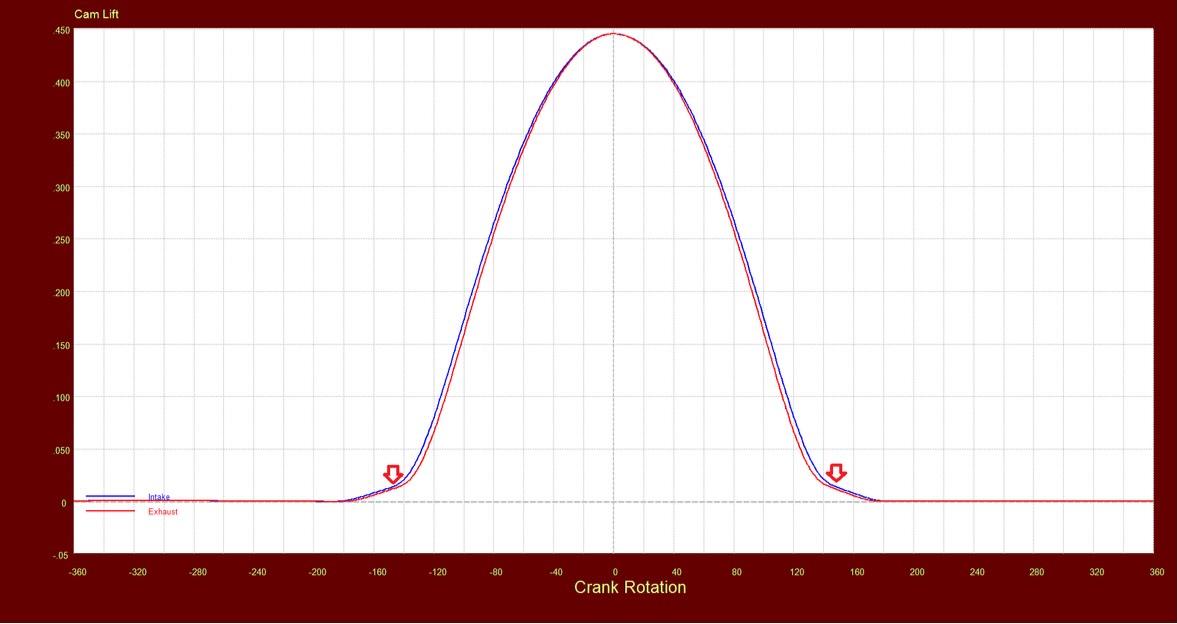
Ideally, you will set your valve clearance "hot" with the engine at operating temperature using a feeler gauge, and at the valve after rocker geometry has been taken into account. With many modern overhead cam engines this cannot be achieved as there is no way to adjust the lash with the cylinder head assembled. In this case the lash is set cold and the camshaft must be designed to take this into account. Below is a lobe profile in our design software showing a lash ramp on a solid bucket engine.
Some engines such as aluminium block push rod V8’s like the Chevrolet LS platform can grow up to half a millimetre (20 thousandths of an inch) as they heat up, and this needs to be taken into account when designing a cam and setting clearances.
During engine operation there will also be multiple parts at various temperatures, and varying levels of heat soak which can change the lash characteristics. For example, an exhaust valve will heat up quicker and to a higher temperature than an intake valve, causing a different level of thermal growth which changes the resulting valve lash. The lash needs to be set to a height that allows the parts to grow, without closing up the gap completely (which can hold the valve open), or opening up the gap so far that the lobe ‘hammers’ the follower, causing tappets to rattle and wear.
There are many factors to take into account: block material, valve material, and valvetrain type - iron or aluminium block, overhead cam or pushrod, cam-on-bucket vs. rocker/follower are all factors on whether the lash will grow or shrink as the engine heats up. That's why a cam manufacturer will determine the lash settings, and why they should be strictly adhered to.
The ideal lash is determined by a component of the lobe design known as the ‘Lash ramp’. These ramps are found at each end of the lift curve - this is the zone between the base circle and main ramp on any camshaft. These ramps are sometimes asymmetric, with a shorter more aggressive curve for opening the valve, and a longer more gentle curve used for closing the valve. A typical solid bucket lash ramp design can be seen below.
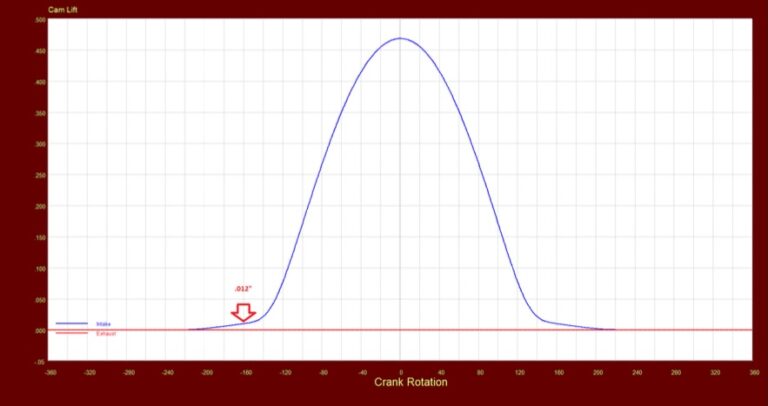
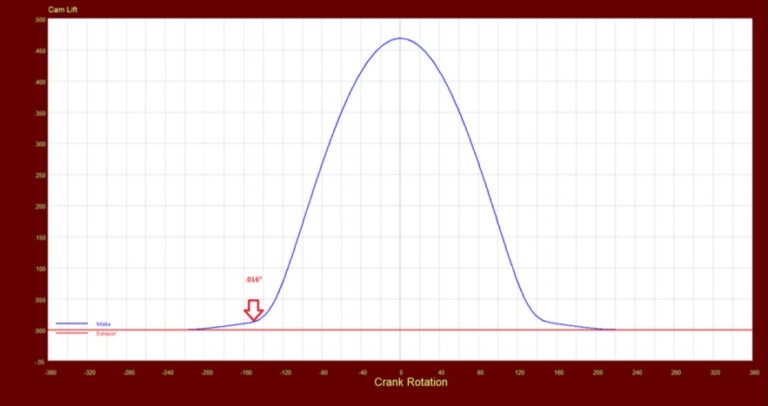
The ramp shown is 0.015” high in total. In this case, the lash would be typically set cold at 0.012” (indicated with the red arrow). The height is determined by the amount the lash will grow as the engine moves through its heat cycles. In some engines, especially push rod setups, lash will easily change by as much as 0.010” as the engine heats up, which requires a large lash ramp (around 0.020”) so the lash can be safely set when the engine is hot, while allowing sufficient clearance as the engine cools down.
For engines with direct acting lifters or buckets, lash must be set cold through specific methods like using bucket and shim or setting valve tip heights. In all cases, the priority is for the cam follower to pick up on the lash ramp first, ensuring the best timing and least wear possible.
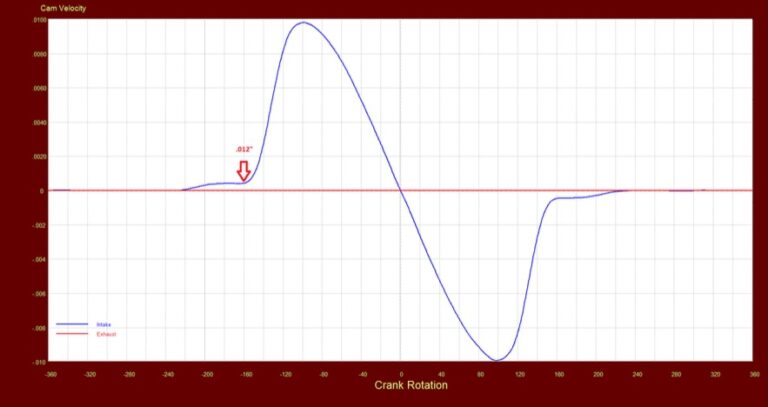
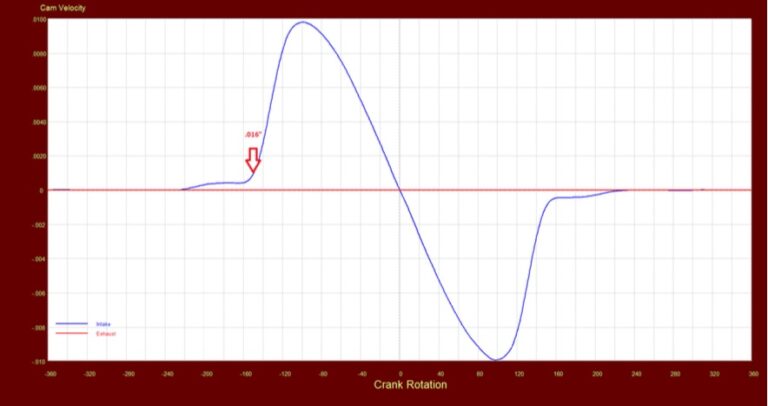
In the DOHC example shown above, the first picture shows correct clearance at .012", and the second picture shows what the valvetrain sees as the engine speeds up (cam velocity). The next two pictures show what happens when the lash is set too loose at 016". This more lash than recommended and you can see the "take up" and "seating" points sit on a steep part of the velocity curve. This is bad news for your valvetrain!
If you want to dive deeper, we have some numbers to show the take-up and seating velocities in more detail. The figures in blue show lash set at .016" (.004" looser than spec) and displays 39.5 inches per second at 8000rpm. This is above our safety limit for longevity and would no doubt cause accelerated valve wear, not to mention unnecessary noise. The the Red is set perfectly and will see a long life.
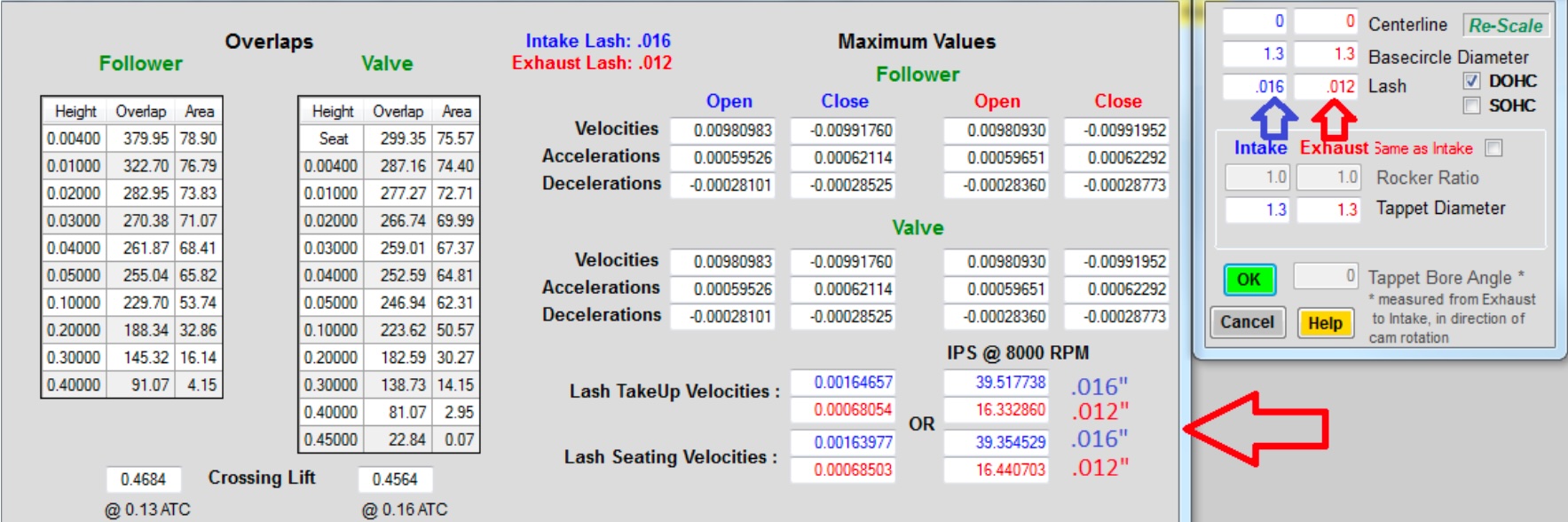
The lash setting is based both on the thermal growth characteristics of the engine, and the lash ramp design that the camshaft manufacturer has used. All cam lobes will be designed with a lash ramp that is tall enough to allow an appropriate clearance to be set, but not so tall as to require excessive lash. Too much clearance allows valvetrain components to bounce around and we want to avoid this happening.
Hydraulic lifters offer flexibility for OEM manufacturers with variations of valve tip heights and base circles, allowing for looser manufacturing and assembly tolerances. This leads to simpler aftermarket installation of camshafts, as there is no lash to set. Hydraulic lifters rely on oil pressure to maintain contact between cam lobes and followers throughout their operating window.
However, they are also heavier and in high rpm builds or aggressive applications where oil or spring control gets pushed to the limit, the lifter can "pump up" and hold the valve open, or bleed down and cause unwanted lash. In these applications a conversion to solid lifters may be superior.
Solid lifters are less complicated and are lighter, lending themselves well to high rpm applications, but they require more setup and maintenance. If a solid lifter cam profile is used in a hydraulic valve-train, the extra duration results in dynamic compression loss and unnecessary valve overlap.
Overall, hydraulic lifter profiles have very little or no ramp at all, which can lead to catastrophic valvetrain failure if used in a mechanical lifter setup.

Need A Copy?
Due to the level of information, we recommend to Download PDF direct to read when you need it.
 AUDI
AUDI
 BMW
BMW
 CAN-AM
 CHEVROLET
 FORD
FORD
 HARLEY DAVIDSON
 HOLDEN
 HONDA
HONDA
 MAZDA
MAZDA
 MITSUBISHI
 NISSAN
 SEADOO
 SUBARU
 TOYOTA
 VW
VW
 Automotive Tools
 KELFORD CAMS MERCH